
How SEO works today in AI era
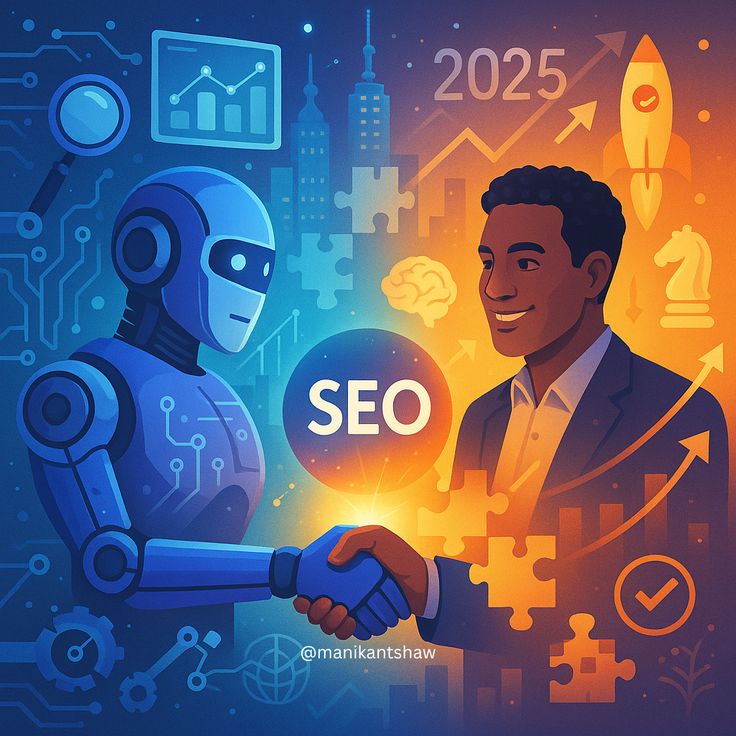
SEO was never about anything except for one thing: getting your content in front of the right people at the right time. But now is not like five or even two years from now. Why? Because Artificial Intelligence (AI) is no longer a hyped word, it is the core of search engine operates and the way marketers plan their strategies
How exactly does SEO work in the age of AI? Let’s see
From Keywords to Intelligence: The Shift in SEO
In the early days, SEO was about putting the right keywords in the right places. You’d sprinkle them in your blog, slap them into your title, and hope Google would rank you.
But search engines are not like before. With AI systems like Google’s RankBrain and BERT, algorithms do not just search for keywords, but know what words mean.Example: When Google shows you “cute outfit for baby girl” Google no longer just looks for pages that have that exact order of words. It tries to understand what you’re looking for: you require outfit recommendations which are cute and for baby girls. AI makes it all possible.
AI and Search Intent: Why It’s the Future Now
Since AI is progressing at a very rapid pace, search intent is where SEO lies. Google would like to display content which indicates why the user is searching and not merely what he searched.
Four broad search intent categories are:
- Informational – To learn something (e.g., “how SEO works”).
- Navigational – To visit some website (e.g., “LinkedIn login”).
- Transactional – To buy (e.g., “buy iPhone 15 online”).
- Commercial investigation – Shop before you shop (e.g., “best laptops for $1000”.
With the AI era, if your content is not achieving intent, you won’t rank—no perfect keywords.
Personalization: AI makes SEO more human
AI allows search engines to personalize results for each user. Two people can search the same keyword and still get different results based on where they are, their previous searches or even the browser they are using.
example:
An Arab user looking for “best coffee shop” in Dubai might be presented with nearby coffee shops.
The London user will notice entirely different things, again, to the same question.
How does this apply to SEO? You will need:
- Do local SEO if you are local.
- Build other kinds of content (blog posts, videos, FAQs) to address other questions from users.
- Understand that a one-rank solution is no longer universal.
- Voice Search and Conversational Queries
Since voice assistants such as Siri, Alexa, and Google Assistant, voice search has exploded. The user doesn’t type in short keywords but complete questions in full
Example: Instead of typing in “weather Dubai,” a user would type in, “What is the weather like tomorrow morning in Dubai?”
This alters SEO strategy:
Optimize for human, long-tail, question-like searches.
Create FAQ-style content answering specific questions.
Optimize for human language, not automated keyword stuffing.
AI Tools for Marketers: Smarter SEO Strategies
- Do keyword research faster (AI tools such as Semrush or Ahrefs use AI to look for patterns).
- Brainstorm content ideas (AI can search for trends and provide you with an insight of what your audience needs).
- Forecast rankings (your AI software may alert you to which words are worth pursuing).
- Auto-report (don’t waste time creating SEO reports from scratch).
The AI era doesn’t make SEO outdated ,it improves it.
Content Quality: AI Raises the Bar
The Big One: It is very easy for Google to identify low-quality or spammy content with AI. Creating 1,000 blogs with AI tools just won’t work.
Google’s E-E-A-T best practices (Experience, Expertise, Authoritativeness, and Trustworthiness) are more important than ever. AI can pick up cues such as
Who wrote the content (original expert vs. generic AI spam).
How accurate and right the information is.
Whether customers read or engage with the content or bounce straight away.
The moral of the tale: Use AI as a tool but inject human sense, experience, and sincerity to be heard.
Visual and Video SEO in the Age of AI
AI “sees” and “understands” visuals more effectively than ever. Google Lens and TikTok search are some proof for that
Images need good alt text and context so AI knows what they represent.
Videos need transcripts, titles, and good thumbnails.
Short-form video SEO (YouTube Shorts, Instagram Reels, TikTok) is flying off the charts because AI loves effective content formats.
If you’re not optimizing multimedia, you’re missing out on major opportunities.
Real-Time SEO: AI + Data = Instant Decisions
Unlike the old days of waiting weeks to analyze campaigns, AI gives real-time insights.
If a blog is not performing well, AI technology can offer suggestions (like rewriting the title or adding new keywords).
If a campaign is not converting, AI can rebid in real-time.
SEO in the AI era is faster, smarter, and more intuitive.
The challenges of Ai in SEO
- Competition becomes tougher. Everyone is better equipped now.
- AI content overload: The search engines are being filled up with AI-written blogs, and quality is the number one issue.
- Data privacy concerns. Targeted results based on data are data based, and the users become more picky about it.
- SEO experts have to tread this tightrope between using AI and maintaining SEO credibility.
CONCLUSION
- Keywords are crucial, but intent even more so.
- Content is king, but with quality and credibility.
- AI tools are useful, but no substitute for human imagination.
- Personalization, voice search, and multimedia SEO are building the future
- If you want to survive with SEO in 2025 and beyond, eliminate the tail-chasing of algorithms and listen to humans. AI is just making that easier (also making it harder) happen simultaneously.